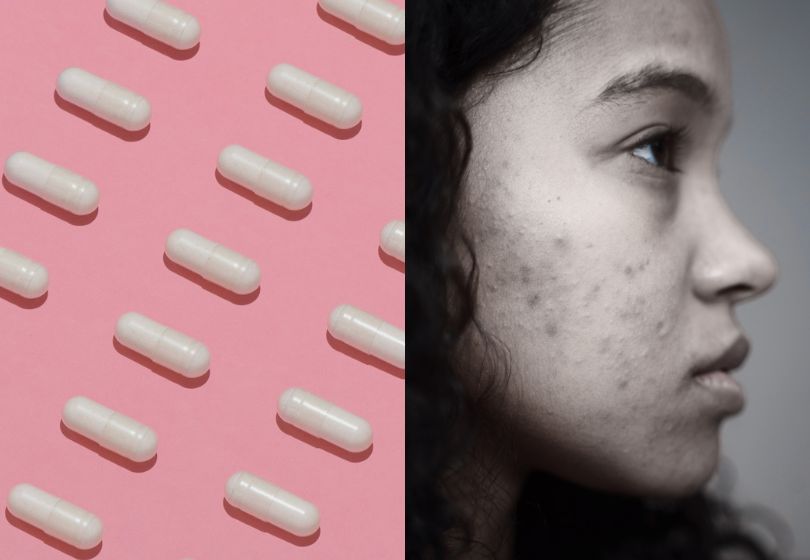
Biotin is one of the most common supplements for hair and nails, and it is generally very safe. Two concerns come up often: whether it causes acne, and whether it is harmful in other ways. The acne link is weak and mostly based on anecdote. The issue that is actually documented is different, and it involves blood tests.
The short answer
Biotin is water-soluble, so the body excretes what it does not use, and even high doses rarely cause direct harm. The claim that biotin causes acne is common but rests on anecdote and an unproven mechanism rather than solid evidence. The real, documented problem is that high-dose biotin interferes with common laboratory tests, including thyroid tests and the marker used to diagnose a heart attack, which can lead to wrong results.
Does biotin cause acne?
The idea that biotin triggers breakouts circulates widely, and the proposed mechanism is indirect. Biotin and another B vitamin, pantothenic acid, or B5, use some of the same routes for absorption, and the theory holds that high-dose biotin crowds out B5, which is thought to play a role in skin. It is a plausible chain, but it has not been shown in controlled studies, and there is no good clinical evidence that biotin causes acne.
Some people report breakouts after starting biotin, others do not, and personal reports cannot separate the supplement from everything else going on at the same time. So the fair summary is that the link is unproven rather than disproven. If breakouts follow starting a high-dose biotin supplement, stopping it is a reasonable test.
What to do if you break out after starting biotin
Since nobody can tell you in advance whether biotin is the cause, the practical approach is to test it on yourself. Stop the biotin and give it six to eight weeks. Skin turns over slowly, so a shorter window will not tell you much either way. If the breakouts settle in that time and come back when you restart, you have your answer.
It is worth checking the dose while you are at it. Most hair and nail supplements contain 5,000 to 10,000 micrograms, which is hundreds of times the roughly 30 micrograms a day your body needs. If you want to keep taking it, a much lower dose is an option.
And before you spend more time on this, there is a bigger question underneath it. Biotin helps hair and nails mainly in people who are genuinely deficient, which is uncommon. Our guide on whether biotin works for hair and nails covers whether it is worth taking in the first place.
The documented problem: blood tests
The issue with real evidence behind it is laboratory interference. Many supplements contain biotin at 5,000 to 10,000 micrograms, far above the roughly 30 micrograms a day the body needs, and these high doses can distort tests that use a biotin-based method. The distortion can push results too high or too low, and it affects important tests, including thyroid hormones and troponin, the marker used to diagnose a heart attack. A falsely normal troponin in someone having a heart attack is a serious risk. Health regulators have warned about this directly. Anyone taking high-dose biotin should stop it several days before blood work and tell their doctor.
Is biotin otherwise safe?
For most people, yes. As a water-soluble vitamin, biotin is not stored to a harmful degree, and no toxic dose has been established. Side effects from the vitamin itself are uncommon. The caution concerns the two issues above rather than any direct toxicity: an unproven but possible link to breakouts, and the well-established interference with lab tests. It is also worth remembering that for most people biotin does little for hair or nails in the first place, since it helps mainly those who are deficient.
The bottom line
Biotin is a safe supplement for most people, and it has no proven link to acne, despite the common claim. If breakouts follow starting it, stopping for six to eight weeks is a fair way to check. The issue that genuinely matters is laboratory interference: high-dose biotin can cause wrong results on thyroid and heart tests, so it should be paused before blood work and mentioned to a doctor. Given that biotin helps hair and nails mainly in people who are deficient, the more useful question for most is whether it is worth taking at all.
Questions people ask
Does biotin cause acne?
There is no solid evidence that it does. The proposed mechanism, competition with vitamin B5, is unproven. Some people report breakouts and others do not. If they follow starting biotin, stopping it is a reasonable test.
Can biotin cause breakouts?
It might in some people, but no controlled study has shown it. The reports are anecdotal, and personal experience cannot separate biotin from everything else going on with your skin at the time.
How long does biotin acne last?
If biotin was the cause, breakouts usually settle within six to eight weeks of stopping, since that is roughly how long skin takes to turn over. If nothing changes in that time, biotin was probably not the trigger.
Does biotin make your skin worse?
For most people, no. Biotin is water-soluble and well tolerated. The acne link is anecdotal, and the documented issue is that high doses interfere with blood tests, rather than anything happening to your skin.
Should I stop taking biotin if I get acne?
Stopping for six to eight weeks is a reasonable way to find out, since nobody can predict this for you. Given that biotin only reliably helps people who are deficient, you may not be losing much by stopping.
Is biotin safe to take daily?
For most people, yes. It is water-soluble, so excess is excreted, and no toxic dose is established. The main caution is its effect on blood tests, rather than direct harm.
How does biotin affect blood tests?
High doses can distort tests that use a biotin-based method, including thyroid tests and troponin, the heart-attack marker. Results can read too high or too low. Stop biotin before blood work and tell your doctor.
How much biotin is too much?
There is no established toxic dose, but the high amounts in supplements, 5,000 to 10,000 micrograms, are far above the roughly 30 micrograms a day needed, and they are enough to interfere with lab tests.
References
National Institutes of Health, Office of Dietary Supplements. Biotin: Fact Sheet for Health Professionals. https://ods.od.nih.gov/factsheets/Biotin-HealthProfessional/
U.S. Food and Drug Administration. Update: The FDA Warns that Biotin May Interfere with Lab Tests. https://www.fda.gov/medical-devices/safety-communications/update-fda-warns-biotin-may-interfere-lab-tests-fda-safety-communication
This article is for information only and is not medical advice. Supplements are not meant to diagnose, treat, cure, or prevent any illness. Talk to your doctor before starting anything new, especially if you are pregnant, breastfeeding, or taking medication.

Leave a Reply