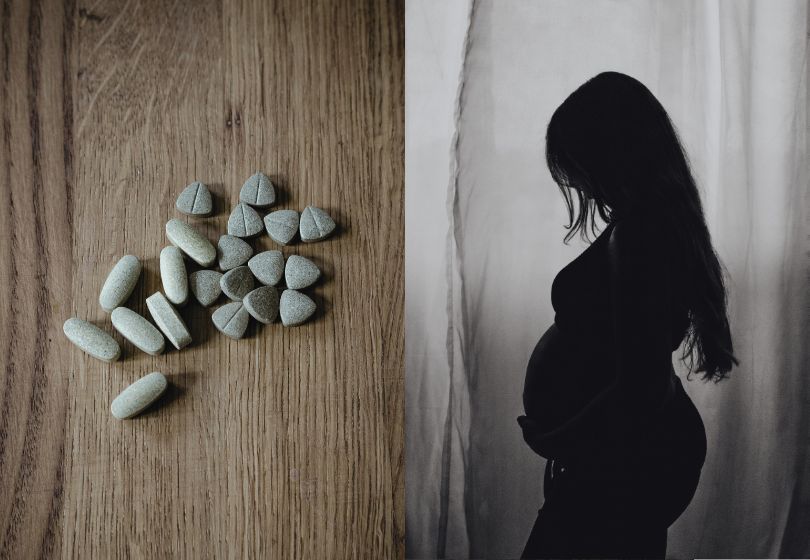
Prenatal vitamins have a reputation as a hair growth secret, taken by people who are not pregnant in the hope of thicker hair. The reputation comes from the thick, glossy hair many women have during pregnancy. But the case for prenatal vitamins for hair growth falls apart once you look at what is actually happening. That hair comes from hormones rather than the vitamins, and taking prenatals for hair carries a real downside.
The short answer
The thick hair of pregnancy comes from a rise in estrogen, which slows the natural shedding of hair so you lose less of it. The prenatal vitamins get the credit, but the hormones do the work. In people who are not pregnant, there is no evidence that prenatal vitamins grow hair, unless they happen to correct a deficiency. They also contain more iron than a normal supplement, and too much iron is harmful. A blood test is a better starting point than a prenatal.
Why pregnancy hair looks thicker
Hair grows in a cycle. Each strand spends years in a growth phase, then a few months in a resting phase before it sheds. During pregnancy, estrogen rises sharply and extends the growth phase, so more hairs stay put and fewer fall out. The result is thicker-looking hair. You lose less hair rather than grow more, and it tracks the hormones rather than anything in a supplement.
After birth, estrogen drops back to normal, and the hairs that were held in place shed at once. This is postpartum hair loss, and it is a normal, temporary effect of the hormone shift. No prenatal vitamin prevents it, because the vitamins were never what held the hair in place.
Why the vitamins get the credit
Prenatal use and thick hair happen at the same time, during pregnancy, so the two get linked. Prenatals do contain nutrients that matter for hair, including iron, folate, and often biotin. The catch is the same one that applies to every hair supplement: these nutrients help hair only when you are short of them. In someone who already has enough, extra does little. We cover this in our guide on hair growth supplements.
Do prenatal vitamins help hair growth if you are not pregnant?
This is where most of the interest sits, and the answer is straightforward. Without the estrogen rise of pregnancy, the mechanism that made the hair look thicker is gone. What is left is a multivitamin with high iron, and a multivitamin only helps your hair if it happens to fill a gap you already had.
So the useful question is not whether to take a prenatal. It is whether you are short of anything. If your ferritin is low, correcting iron can genuinely help your hair, and you can do that with an iron supplement at the right dose rather than a prenatal that also loads you with everything else. If your levels are fine, a prenatal changes nothing about how your hair grows.
The downside of taking them anyway
Prenatal vitamins are made for the higher needs of pregnancy, so they contain more of certain nutrients than a standard supplement, iron in particular. For someone who is not pregnant and not deficient, that extra iron has no benefit and carries risk. Too much iron can cause nausea, constipation, and, in large amounts, more serious harm, since the body has no easy way to remove the excess. Some prenatals are also high in other nutrients that add up when they are not needed.
What to do instead
If your hair is thinning or shedding, the useful step is a blood test rather than a prenatal. It can check for the deficiencies most often linked to hair loss, including low iron, measured as ferritin, and vitamin D. If a test finds a shortfall, correcting that specific nutrient is worthwhile. If it finds nothing, a prenatal will not add anything, and a targeted approach avoids the excess. Our guide on iron deficiency and hair loss covers the ferritin number worth asking for, and our guide on supplements for brittle nails takes the same testing-first approach for nails.
The bottom line
Prenatal vitamins do not grow hair. The thick hair of pregnancy comes from estrogen extending the growth phase, and it fades after birth regardless of any supplement. In people who are not pregnant, prenatals help hair only if they correct a genuine deficiency, and they carry more iron than most people need, which is a real reason to avoid taking them casually. A blood test for ferritin and vitamin D is the better first step, and it points to what, if anything, is worth taking.
Questions people ask
Do prenatal vitamins make your hair grow faster?
No. The thick hair seen in pregnancy comes from estrogen slowing hair shedding, not from the vitamins. In non-pregnant people, there is no evidence prenatals grow hair unless they fix a deficiency.
Can I take prenatal vitamins for hair growth if I am not pregnant?
You can, but there is little reason to. The thick hair people associate with pregnancy comes from estrogen, not from the vitamins. Prenatals also contain more iron than most people need, and the excess builds up in your body.
Do prenatal vitamins make your hair thicker?
Not on their own. They only help if they happen to correct a deficiency you already had. In someone with normal levels, there is no evidence that prenatals thicken hair.
What is the difference between prenatal vitamins and hair vitamins?
Prenatals are formulated for pregnancy, with higher iron and folate. Hair supplements usually centre on biotin. Neither grows hair unless it is fixing an actual deficiency.
How long do prenatal vitamins take to work for hair?
If they are correcting a deficiency, expect at least 8 to 12 weeks before any change, because hair grows slowly. If you were not deficient, more time will not help.
Is it safe to take prenatal vitamins when not pregnant?
It carries some risk. Prenatals contain more iron than a standard supplement, and excess iron is harmful for someone who is not deficient. An approach based on a blood test is safer.
Why does hair get thick during pregnancy?
Estrogen rises and extends the growth phase of the hair cycle, so fewer hairs shed. This makes hair look fuller. It reverses after birth, causing temporary postpartum shedding.
What should I take for hair growth instead?
Start with a blood test for ferritin and vitamin D. If it finds a deficiency, correct that specific nutrient. If not, no supplement is likely to help much.
References
Almohanna HM, Ahmed AA, Tsatalis JP, Tosti A. The Role of Vitamins and Minerals in Hair Loss: A Review. Dermatology and Therapy. 2019;9(1):51-70. https://pmc.ncbi.nlm.nih.gov/articles/PMC6380979/
National Institutes of Health, Office of Dietary Supplements. Iron: Fact Sheet for Health Professionals. https://ods.od.nih.gov/factsheets/Iron-HealthProfessional/
This article is for information only and is not medical advice. Supplements are not meant to diagnose, treat, cure, or prevent any illness. Talk to your doctor before starting anything new, especially if you are pregnant, breastfeeding, or taking medication.

Leave a Reply